Keeshonds of the 1940's
Once the Second World War was over there were very few keeshonds left. Kennels had been forced to disperse their dogs among friends and relatives. Enough food could usually be found to feed one dog but very few were able to feed more on wartime rationing. Many of the dogs that were left at the end were getting on in years too.
Miss Barbara Glover had succeeded in bringing five members of the Evenlode clan through to the end, Lucinda, Liebling, (below left) Lehrmeister, Pieter and Penelope, on behalf of Miss Hastings, who had worked in the First Aid Nursing Yeomanry during the war. Miss Glover had one of the pups from the first litter to be born after the end of the war, from Pieter and Penelope of Evenlode, and started her own breeding programme with the Welford affix from that pup, Truda of Evenlode. Tabitha (below centre) from the same litter went to Margo Emerson and became the foundation of the Rhinevale line.
Miss Barbara Glover had succeeded in bringing five members of the Evenlode clan through to the end, Lucinda, Liebling, (below left) Lehrmeister, Pieter and Penelope, on behalf of Miss Hastings, who had worked in the First Aid Nursing Yeomanry during the war. Miss Glover had one of the pups from the first litter to be born after the end of the war, from Pieter and Penelope of Evenlode, and started her own breeding programme with the Welford affix from that pup, Truda of Evenlode. Tabitha (below centre) from the same litter went to Margo Emerson and became the foundation of the Rhinevale line.

Liebling of Evenlode
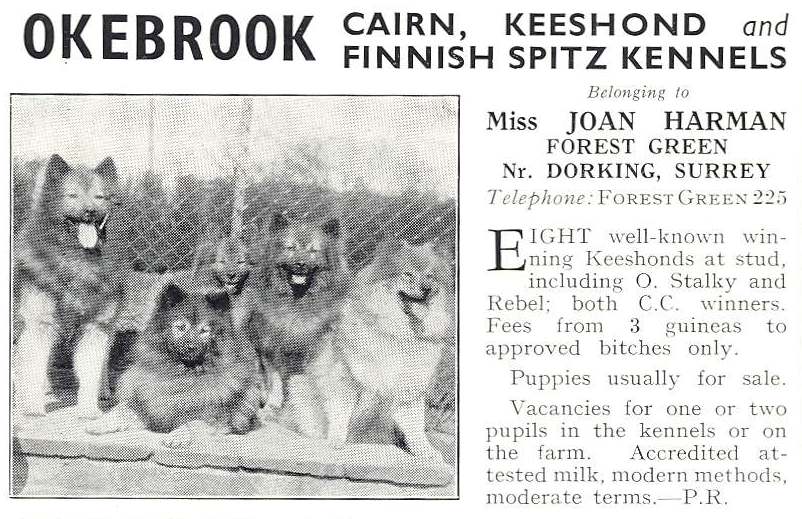
1940 Okebrook
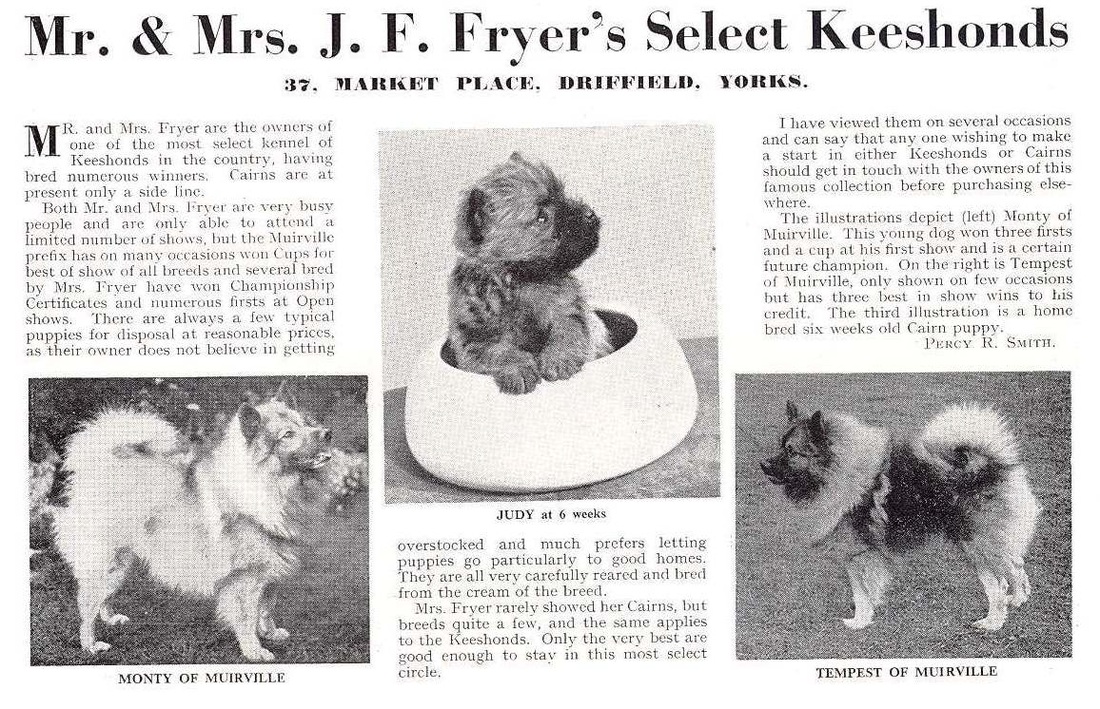
1940's Muirville
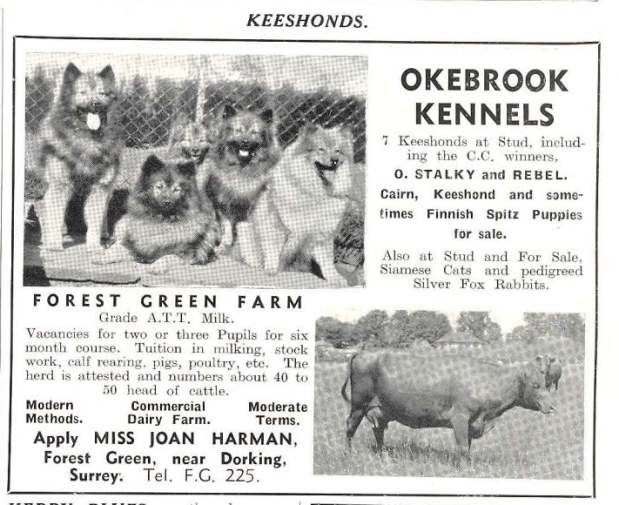
1941 Okebrook
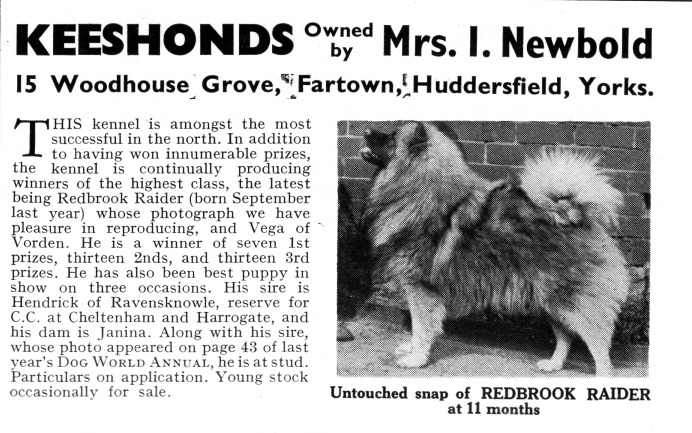
1942 Redbrook Raider
1942 Vorden
1943 Muirville

1943 van Zaandam
1944 Kultz
1944 Grovelyn
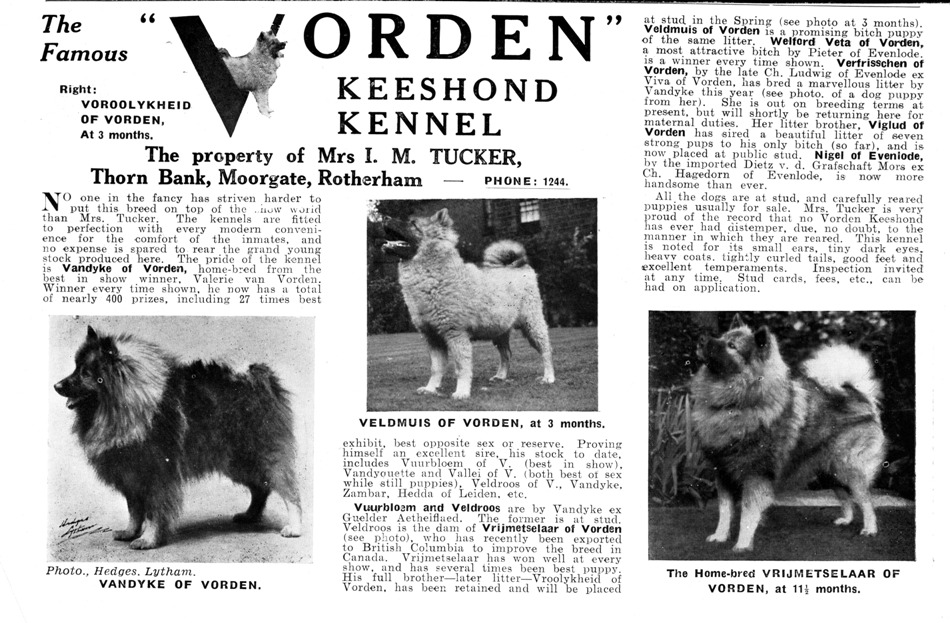
1944 Vorden
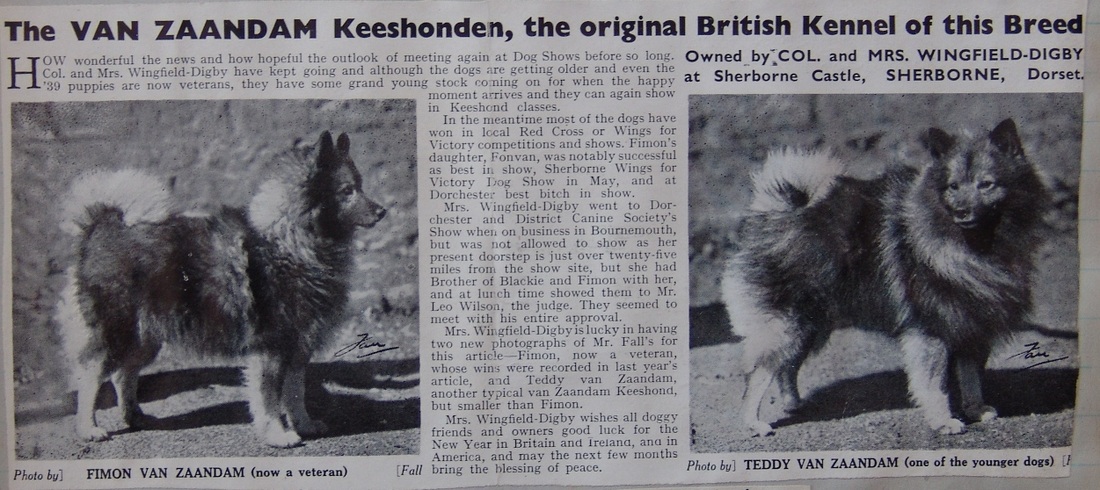
1945 van Zaandam
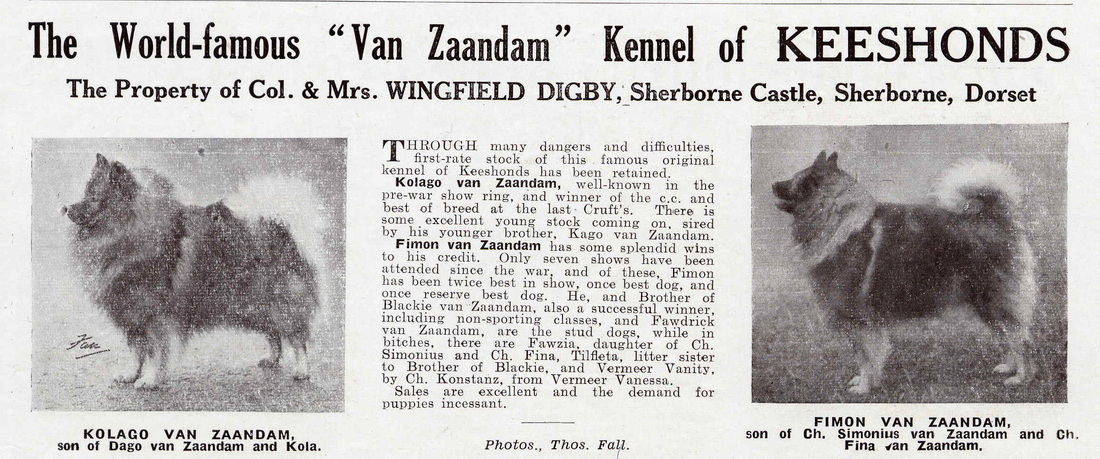
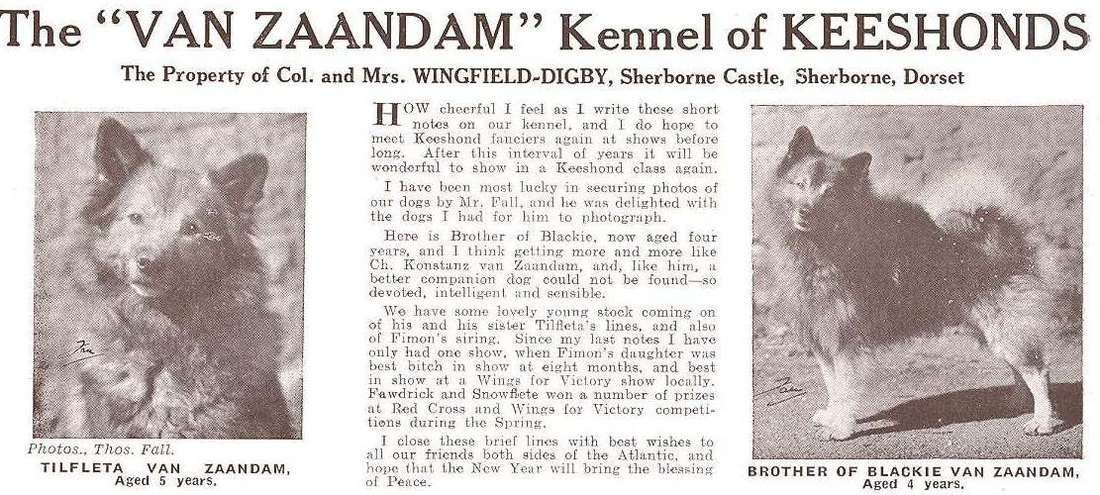
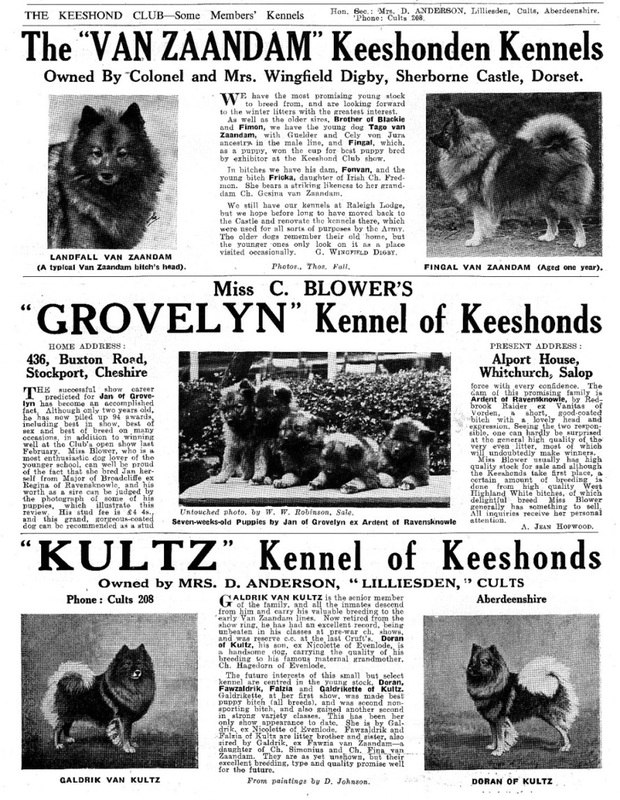
In the clipping above the end of the war is mentioned, and how people are looking forward to resuming showing and breeding with what younger stock they have. Mrs.Wingfield Digby had succeeded in placing her dogs with members of the staff of the castle and with relatives, so she was able to regroup straight away, with dogs such as Landfall and Fingal (see photos of these two dogs on the Keeshond Club page from 1946 n the right0hand column) She still had some of the older dogs such as Brother of Blackie and Fimon. She notes in 1946 that the family are still living at Raleigh Lodge, to where they moved as war broke out to enable the castle to be used by the army. The kennels at the castle needed renovating, the army not having used them kindly, so it would be a while before dogs and family could return to the castle.
During the war years the combings from their dogs were spun and knitted into a great many garments for the troops. Mrs Wingfield Digby says that the hair from her dogs was used exclusively for mittens for the Home Guard, of which her husband commanded a large force in Dorset 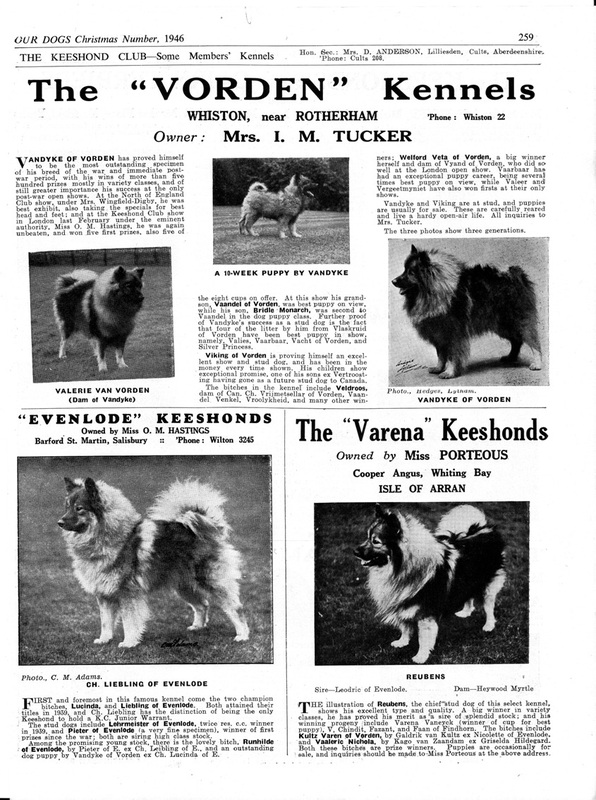
1946 Keeshond Club
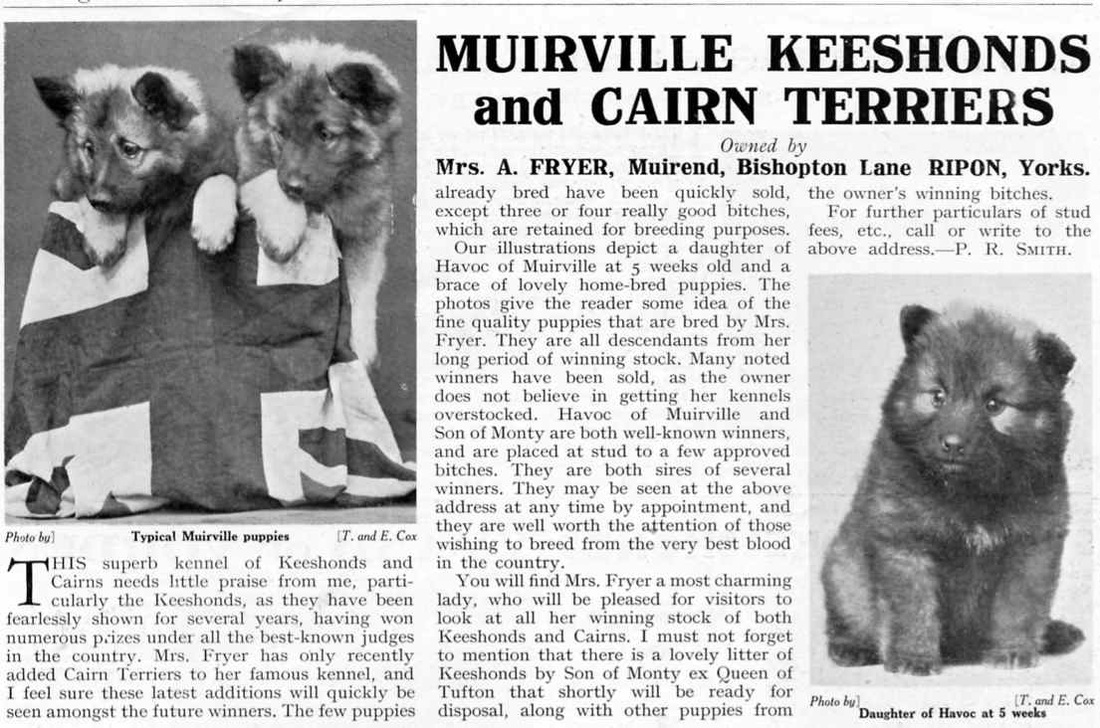
1946 Muirville
1946 Summerleaze

1946 Vorden
1942 Kultz
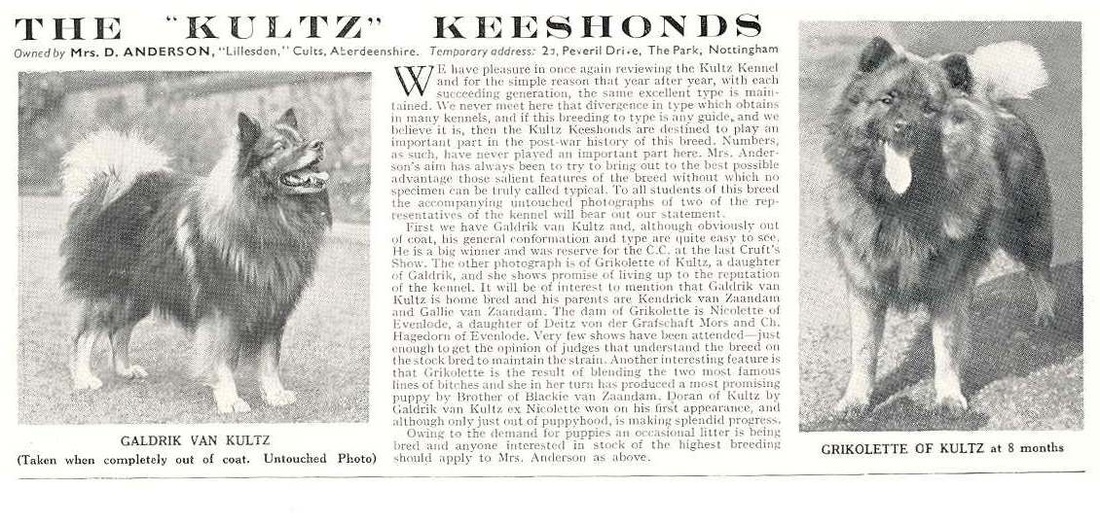
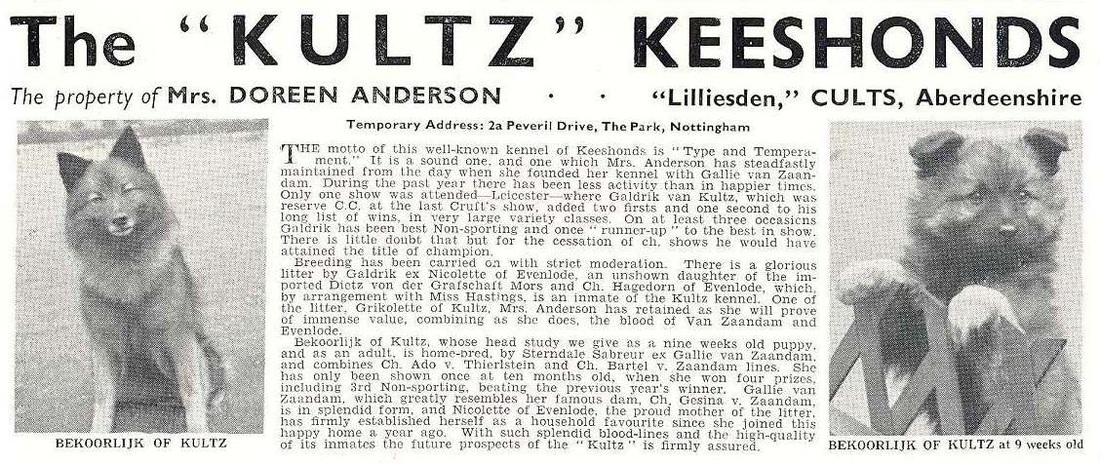
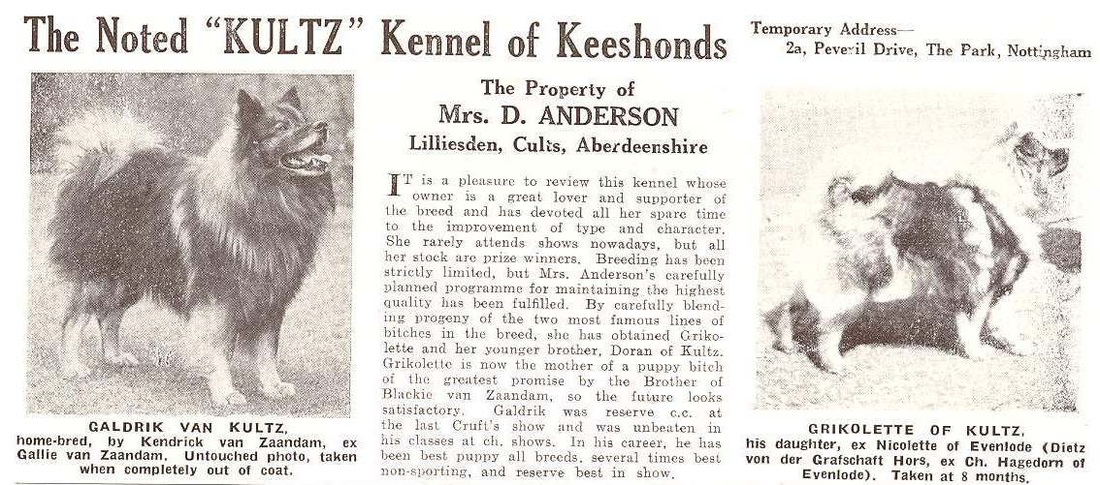
Doreen Anderson of Kultz must also
be mentioned for it was she who kept the Keeshond Club going, albeit in name
only, with Baroness Burton and Mrs Wingfield Digby paying the annual
registration fees to The Kennel Club and keeping the paperwork up to date. Here is shown Galdrik of Kultz (top right) son of Kendrik van Zaandam
and Gallie van Zaandam. Also shown here
(above) at nine weeks is Bekoorlijk of Kultz, son of Sterndale Sabreur and Gallie van
Zaandam.
As we near the end of the decade one of the
best-known dogs of the breed was born.
His sire was a dog of unknown pedigree that had been found abandoned
during the war as a puppy in Austria. He had been left behind with his dam and a
sibling by the retreating German army, and found himself with Mrs Wingfield
Digby at the age of two. She immediately
saw his potential, and mated him to her Benita van Zaandam, registering him as
Bimbo of Puch. The result was the dog
that became Int. Ch. Billo van Zaandam (right) shown here as a two-year-old in 1951. A second litter from Bimbo and Benita produced Bobrie, and
these two were Mrs. Digby’s much-loved house dogs for many years, through the
1950’s and well into the 1960’s, together with Birlinn, a grandson of Bimbo and
Benita
|
Tabitha of Evenlode

1940's Kultz

1942 Okebrook
1942 Guelder Aron

1943 Summerleaze
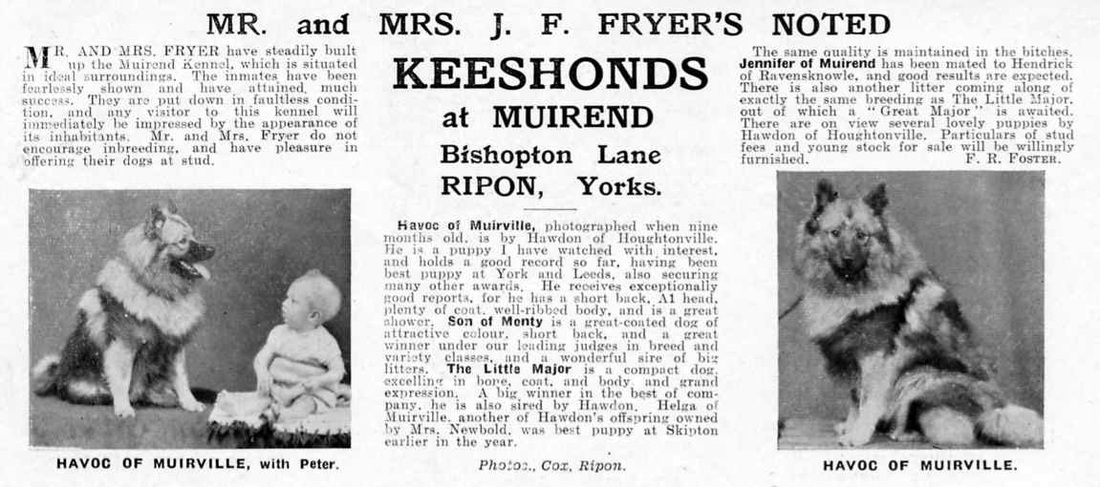
1943 Muirville
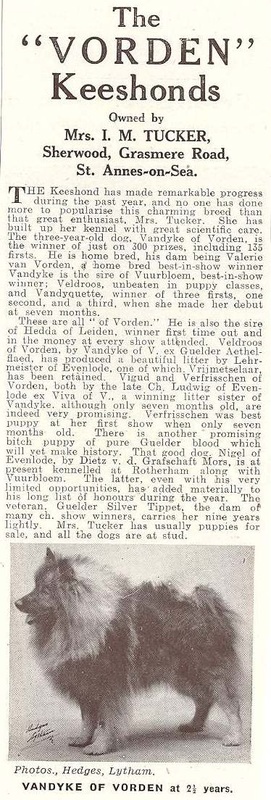
1943 Vorden
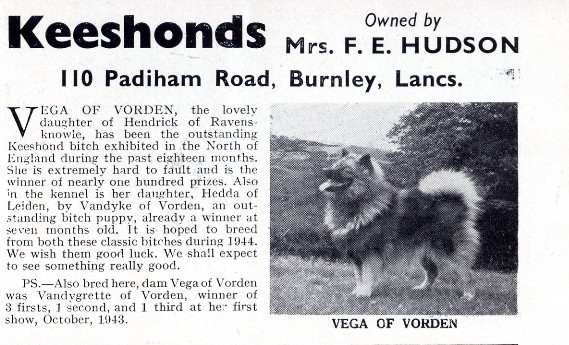
1944 Vega of Vorden
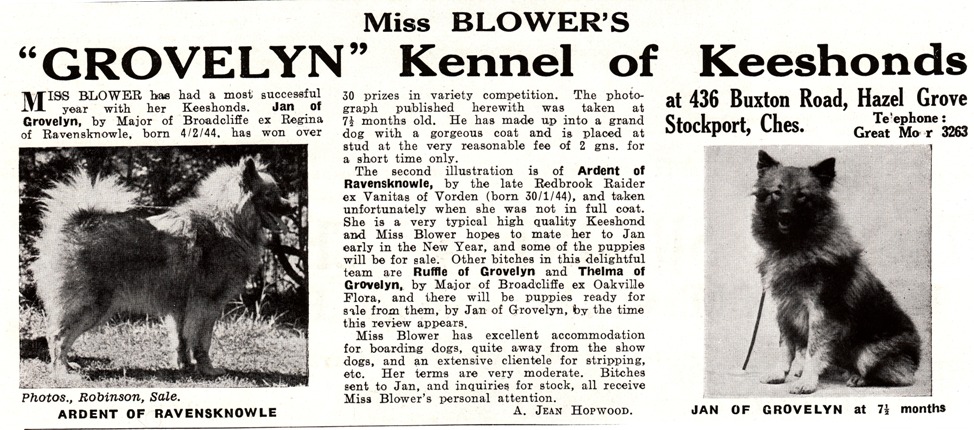
1945 Grovelyn
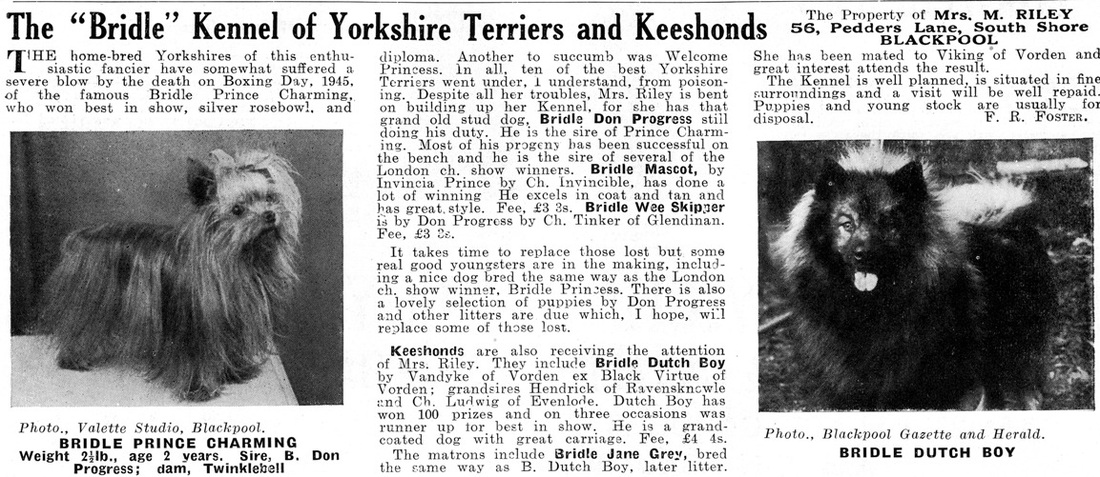
1946 Bridle
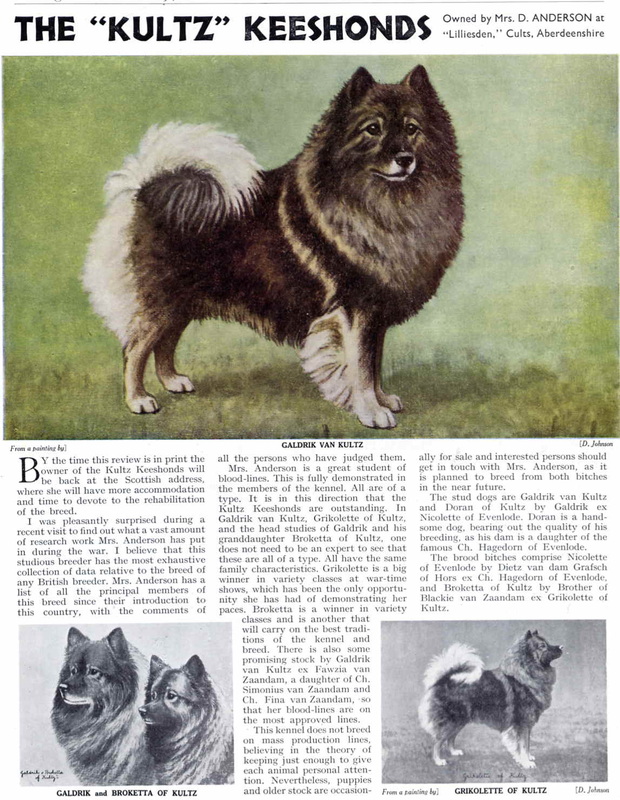
1946 Kultz
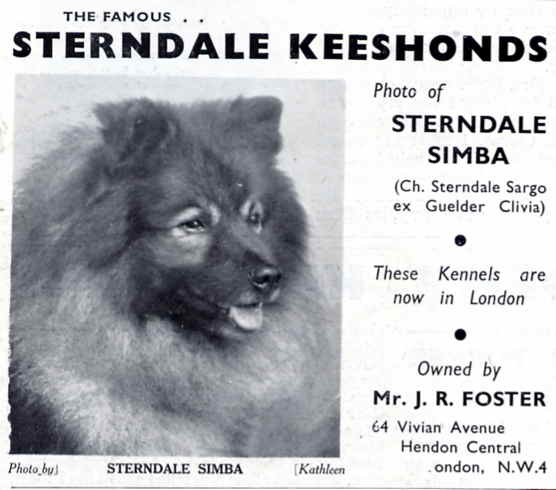
1946 Sterndale
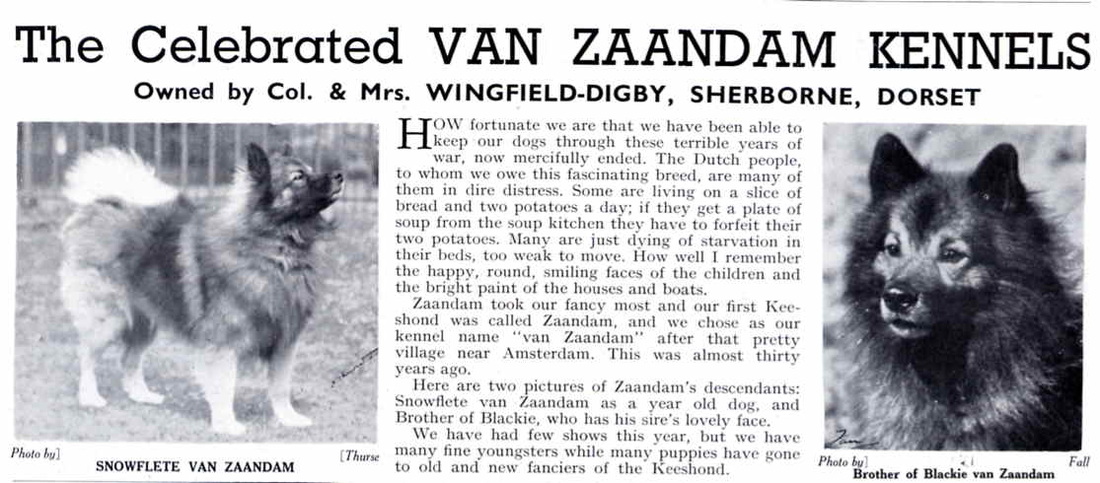
1946 van Zaandam
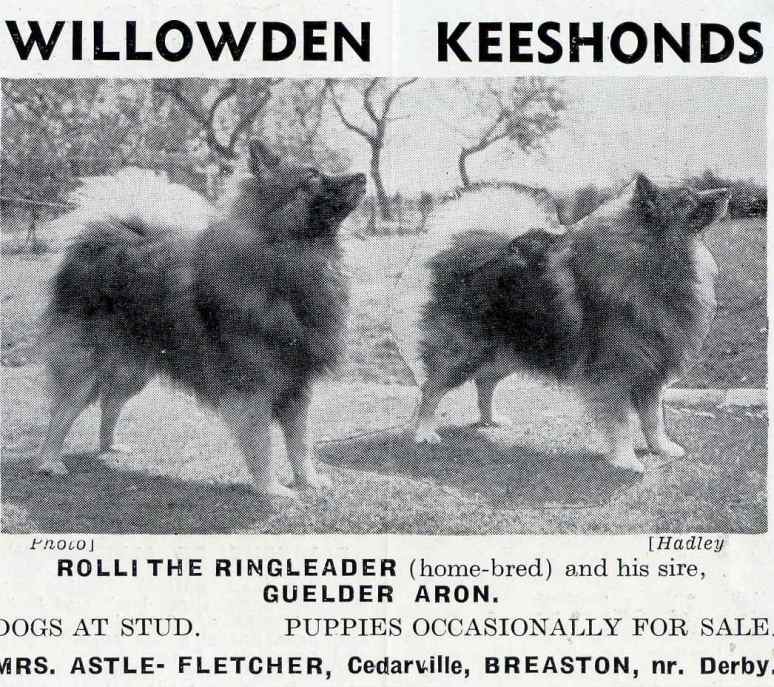
1946 Willowden
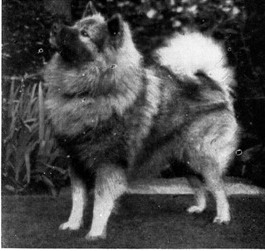
Vrijmetselaar of Vorden
There had been no championship
shows during the war, as people had been too busy with war work to organise
large shows, in addition to the difficulty of travelling due to lack of fuel,
and the night-time restrictions on driving. Small local shows had been organised as light
relief and many of the keeshonds had been doing well when they were
present. In her book “Keeshonds of the
World” Margo Emerson tells a funny story about how Mrs Newbold, who bred the
Ravensknowle affix, came into keeshonds.
In the early 1940’s she wanted a chow, so when a friend told her of a
litter they knew of she went and bought one, despite them not being the colour
she was looking for!! Quite understandable
really, as chows are not noted for being all shades of silver, grey and
black! A neighbour persuaded her to show
him, and she took him to a terrier breeder for preparation. His undercoat was pulled out, he was clipped,
and shaved round the ears and his tail formed into a ball on his back. He won four cards! The show was not very well attended so he won
them by default. However, this
experience did lead to Mrs Newbold acquiring a very nice bitch called Queen of
Tufton, who produced the first champion to be made up after the war, Major of
Broadcliffe. (above right) Major was a
very sound dog in body and temperament, very dignified with great
character. He sired three champions in
just one litter, one of them being Verschancing of Vorden, who was the sire of
Volkrijk of Vorden who in 1957 was the only keeshond ever to have won that
coveted accolade of Best in Show at Crufts.
And that dog that was so unconventionally prepared for his first show
was in fact Hendrick of Ravensknowle, (above right) who during the war years in spite of the lack of shows won over four
hundred cards, mostly firsts.
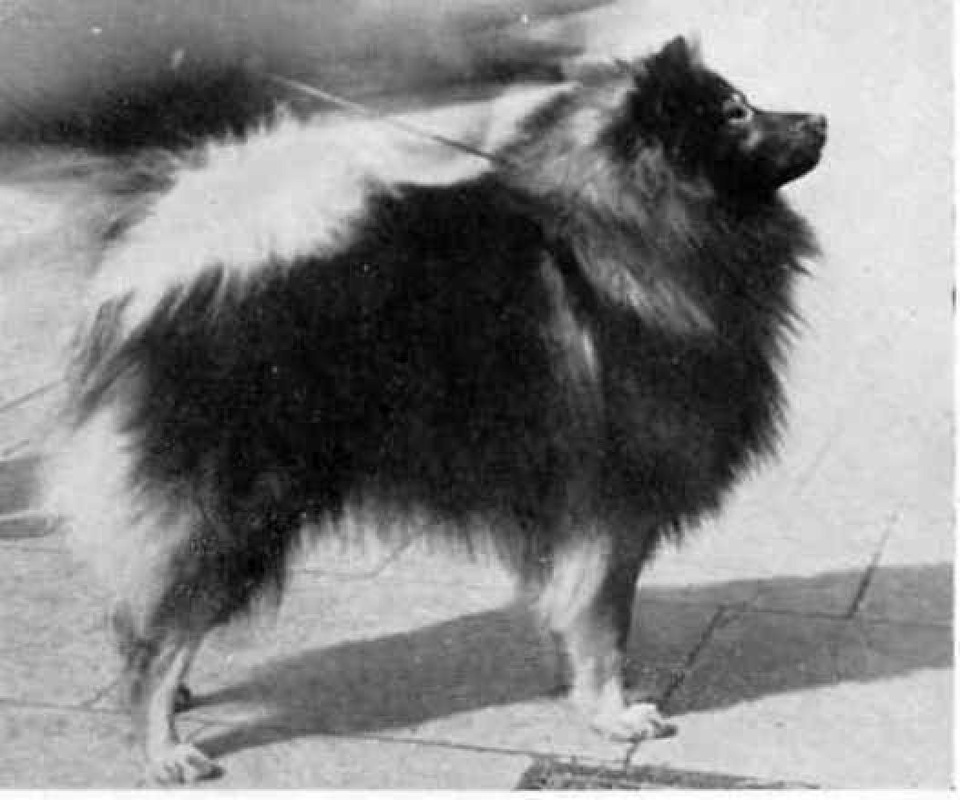
Billo van Zaandam
|
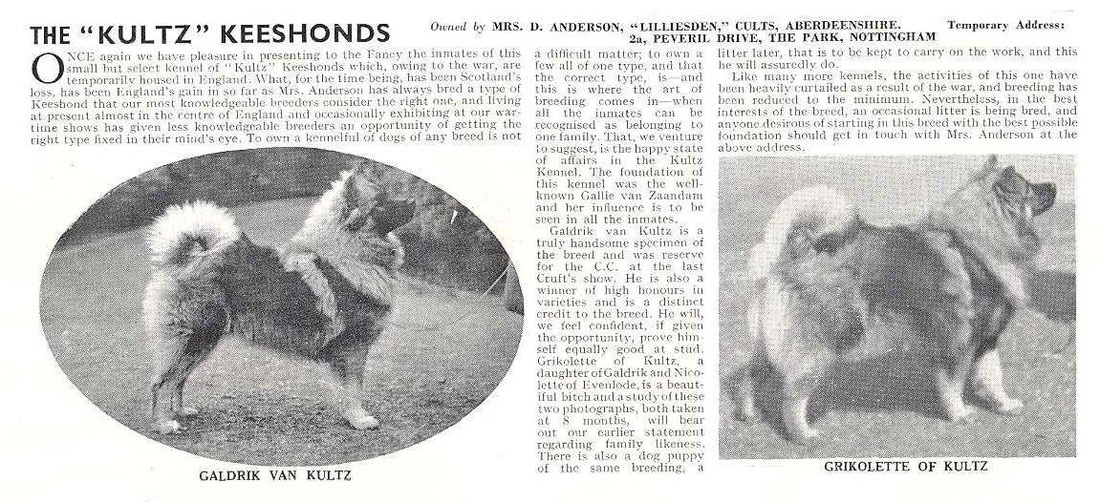
Kultz 1940's
1940 Kultz

1942 Dog World
1942 Summerleaze
1943 van Zaandam
1943 Vorden
1944 van Zaandam
1944 Muirville
1944 Summerleaze
1946 Keeshond Club
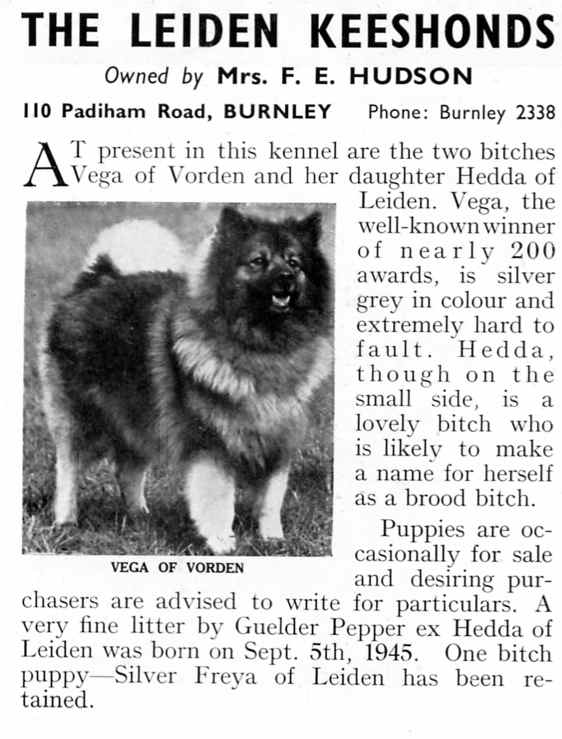
1946 Leiden

1946 Vorden
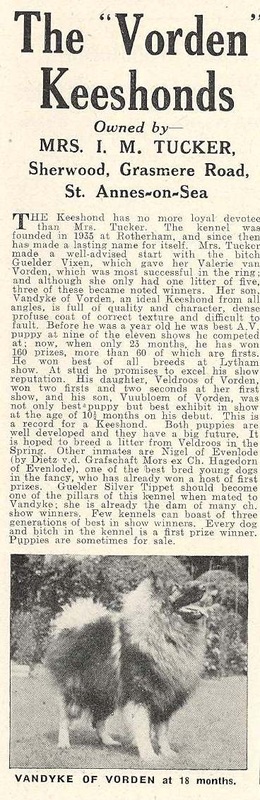
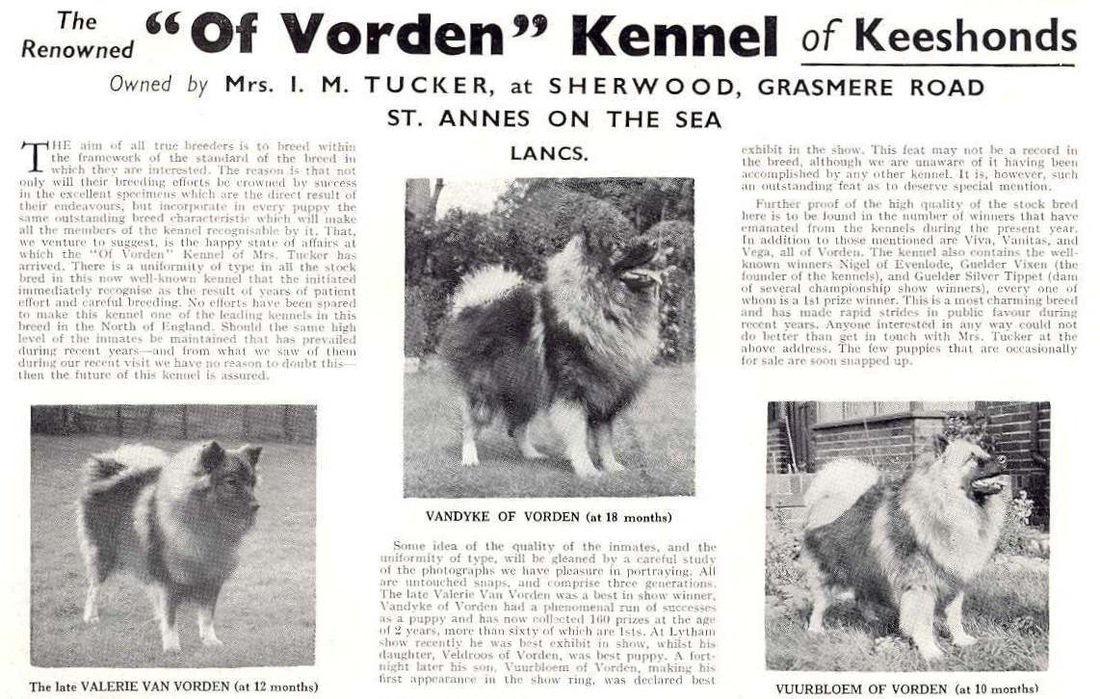
During the 1940's Mrs Rene Tucker with Vorden was becoming prominent, with Valerie (below far left) and her son Vandyke (below far left) and some promising puppies coming along, including Vuurbloem of Vorden, and Vrijmetselaar of Vorden (below left) who went on to become a Canadian Champion, siring a Welford litter before he went, and many more litters when he arrived in Canada.

1946 Wistonia
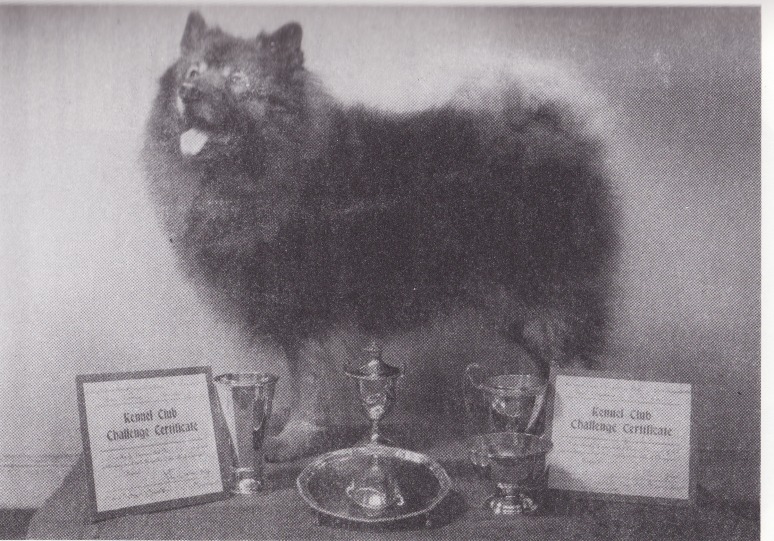
Major of Broadcliffe
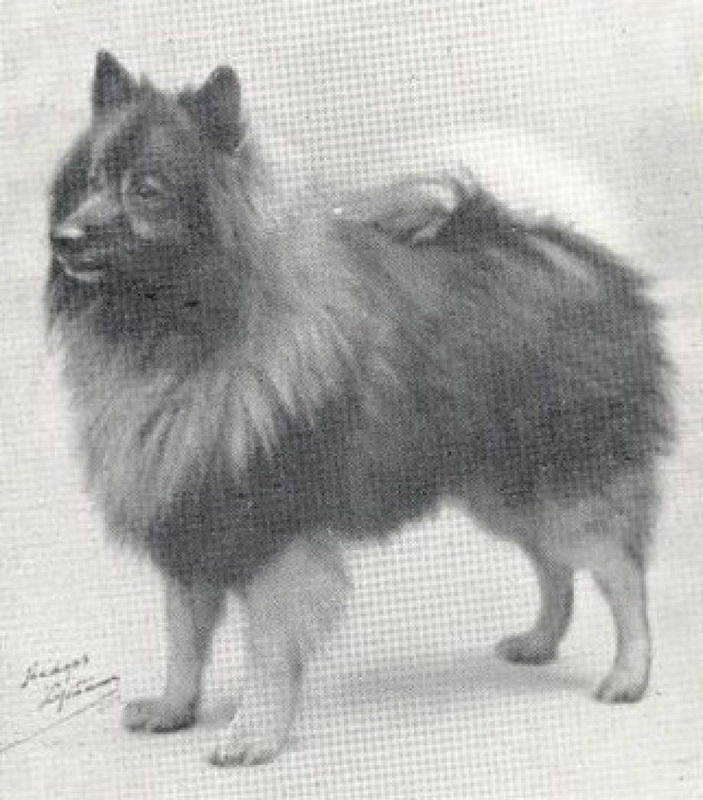
Hendrik of Ravensknowle
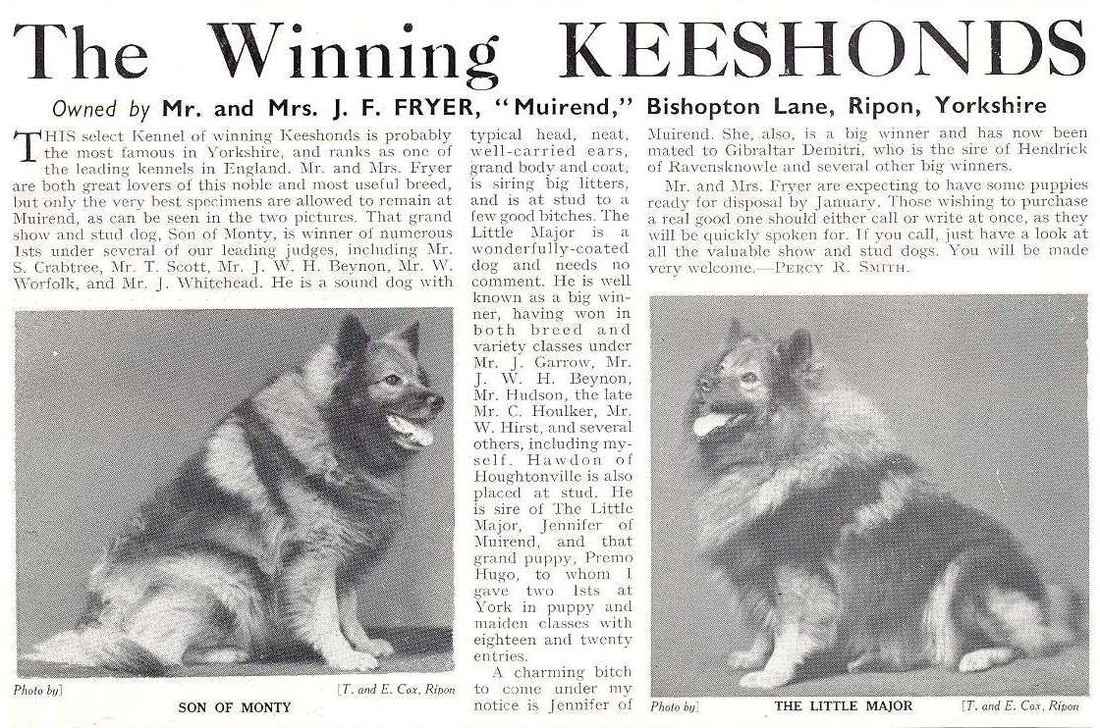
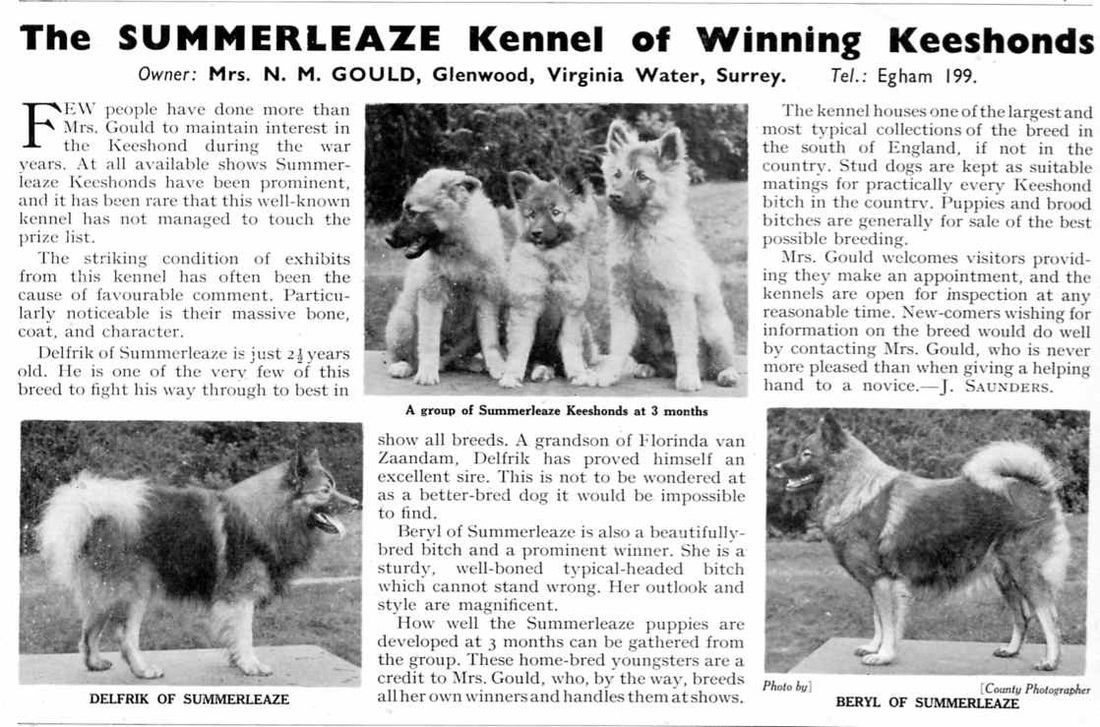
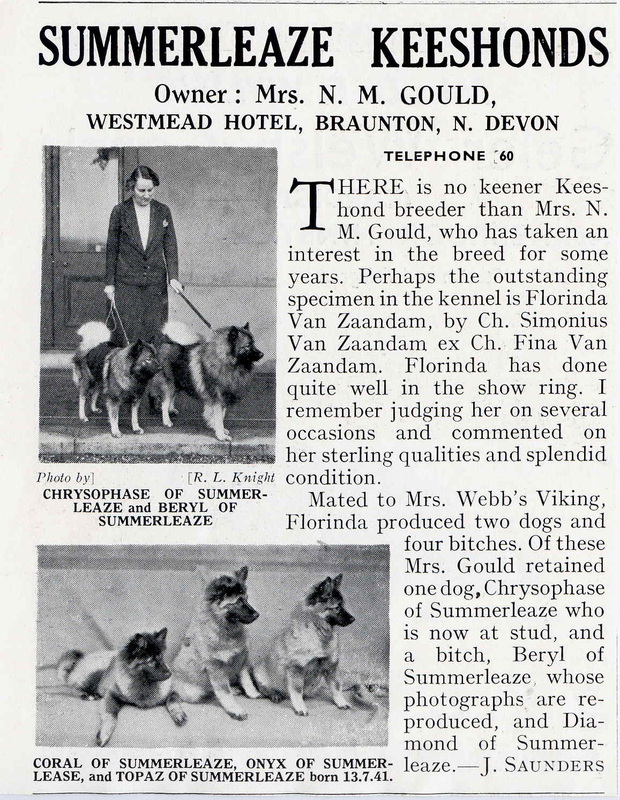
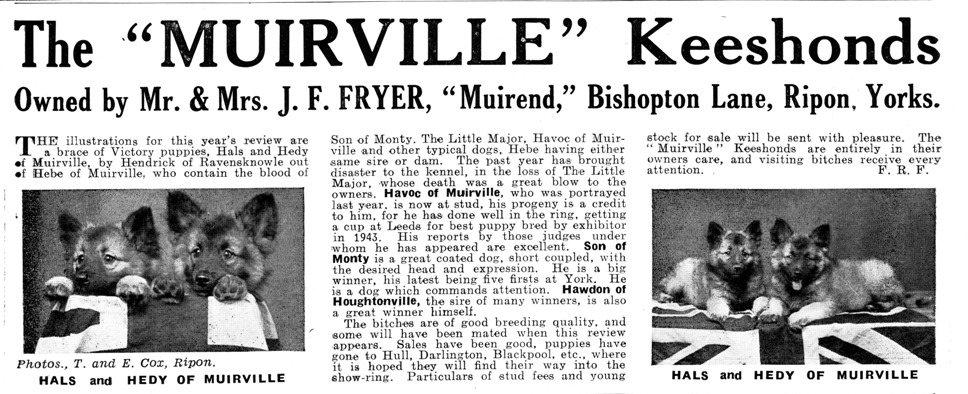
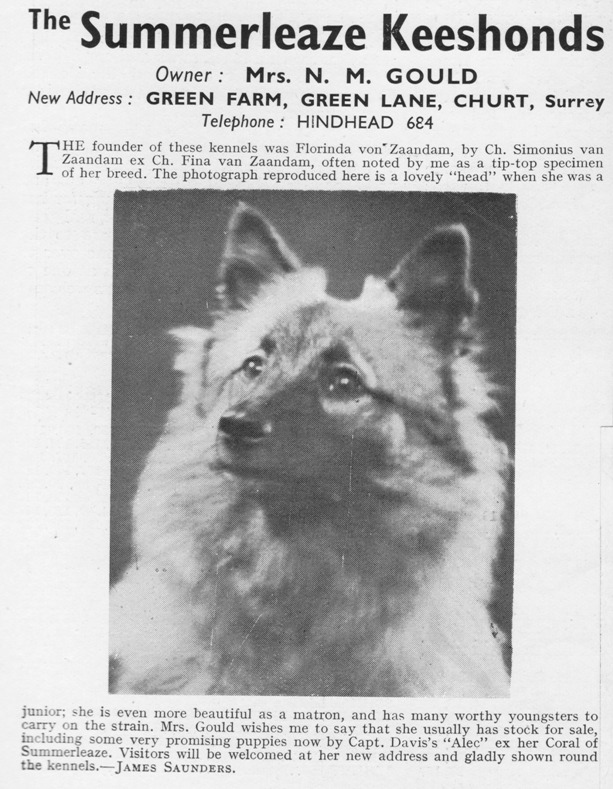
A few other kennels kept going through the war with just one or two dogs, including Muirville, whose Havoc of Muirville had always received favourable comments at the pre-war shows. Flying the Muirville flag in 1944 are these two pups, Hals and Hedy of Muirville. (below) The Summerleaze kennels, founded on Florinda van Zaandam, (below) also kept going. The photo here from 1943 shows on the left Beryl, and on the right her brother Chrysophase who is the sire of the pups in the centre, the dam being Florinda. (below)
Hals and Hedy of Muirville
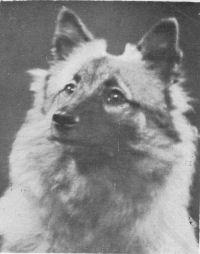
Florinda van Zaandam
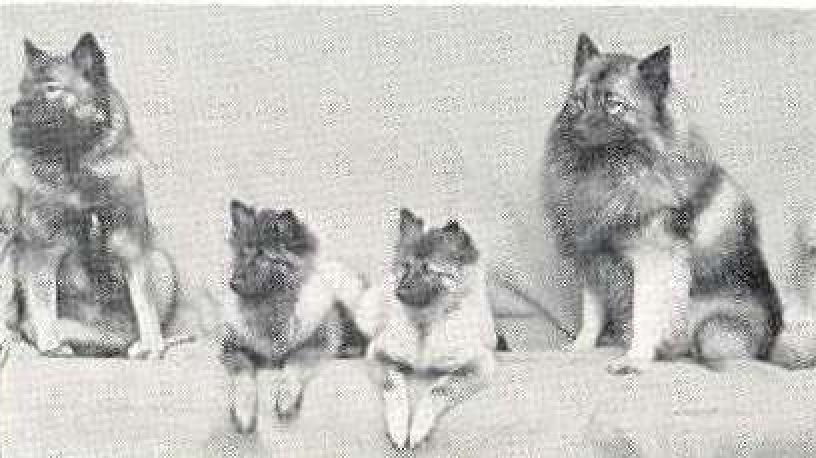
Beryl and Chrysophase of Summerleaze
|